Ants in the kitchen: how to actually stop them coming back
Why surface sprays make the ant problem worse and gel bait is what works. Plus how to identify the common Australian house ants.
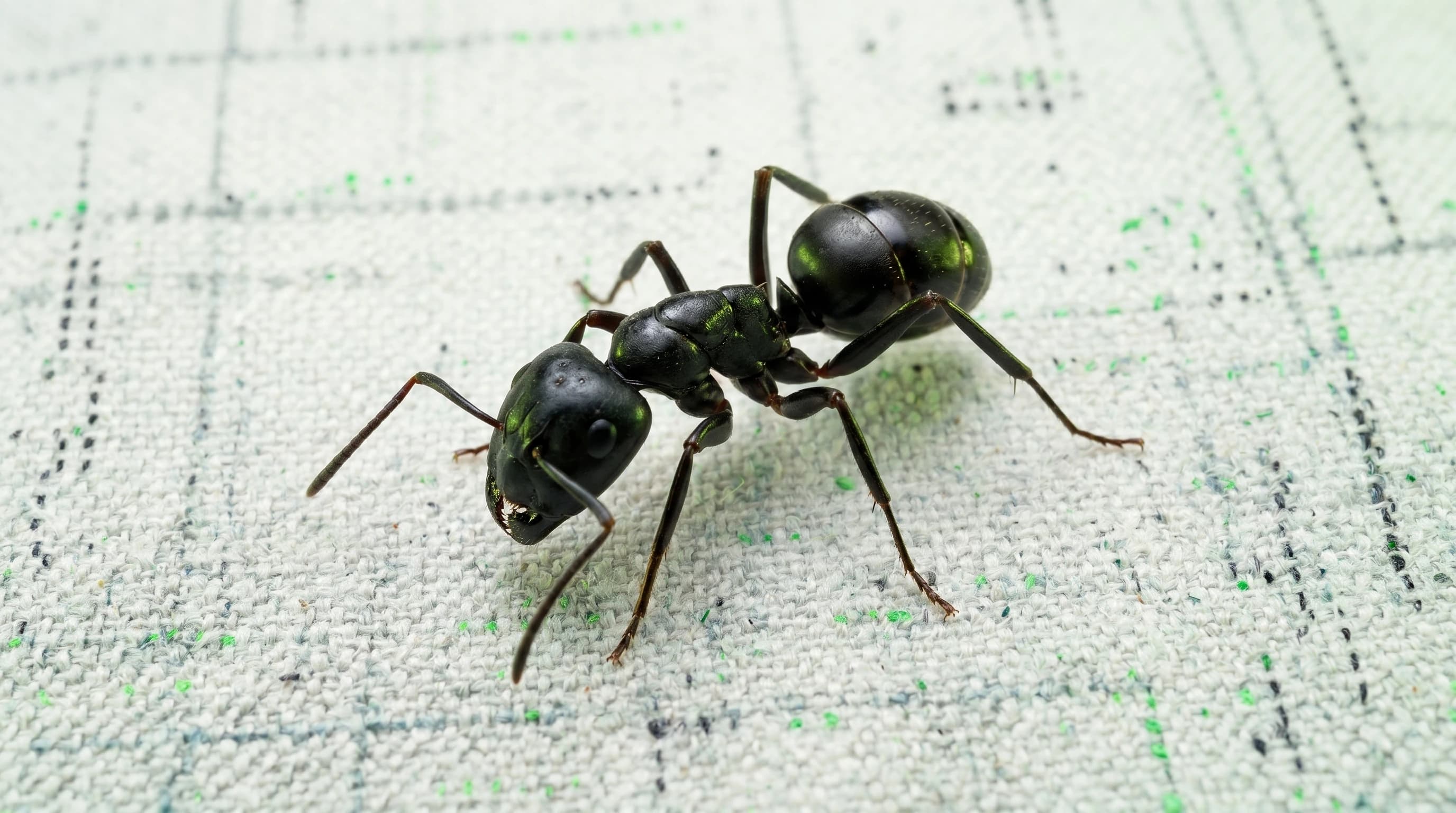
The short answer
For most ant problems in Australian homes, the right tool is a non-repellent gel bait or liquid bait placed directly on the ant trail. Workers carry it back to the nest, feed the queen and brood, and the colony collapses in 5–10 days. The ants you see are a small fraction of the colony. Kill them with spray and the rest, including the queen and brood out of sight, just keeps replacing them.
Common Australian house ants
Black house ant (Ochetellus glaber)
2.5–3 mm, shiny black, fast-moving in clear trails. The most common “ants in the kitchen” ant in Sydney, Melbourne, Brisbane. Nest outdoors in soil or under paving, send trails indoors for sugar and protein.
Coastal brown ant (big-headed ant, Pheidole megacephala)
2–3 mm, light brown, two distinct sizes in the same trail (workers and soldiers with bigger heads). Common in subtropical regions and along the east coast. Will tear into pet food bowls, sugar bowls, fruit.
Argentine ant (Linepithema humile)
2.5 mm, dull brown. Forms supercolonies (multiple queens, no inter-colony aggression). Found in many southern and coastal areas. The hardest of the common ants to treat because killing one nest doesn’t affect the others.
Singapore ant / bicoloured ant (Trichomyrmex destructor)
1.5–2.5 mm, two-toned (yellow-brown body, darker head). Cause structural damage by chewing electrical insulation and wood. More common in northern Australia but spreading. Treat as a priority. They’re not just nuisance.
Bull ants and jack jumpers
Large (10–25 mm) outdoor ants with serious stings (where jack jumpers live, 2–3% of people have had a generalised allergic reaction to a sting, and some reactions are life-threatening). Nest in soil mounds. If you have a nest near kids’ play areas, treat it with a pro. DIY treatment of a bull ant nest is both risky and often ineffective.
How to treat ants in the kitchen
Step 1: identify what they’re after
Are they on the sugar bowl? Pet food? The bin? Greasy bench? Different ant species (and the same species at different times of year) want different food: protein for brood-rearing in spring, sweet for energy in summer. The bait you use should match. Get a combination protein + sugar gel bait if you’re not sure.
Step 2: place gel bait on the trail
Dot small (matchhead-sized) drops of gel bait directly on the ant trail. The trail is the ants’ supply line. They’ll find the bait within minutes and carry it back. Don’t spray. Don’t clean the trail. Don’t block it. You want maximum traffic on the bait.
Step 3: wait 5–10 days
Activity gets worse for the first 2–3 days as more ants discover the bait and ferry it back. Then it falls off as the colony dies. Add fresh bait if the dots dry out before then.
Step 4: clean once the trail is gone
Wipe down benches with vinegar (removes the pheromone trail). Seal food in containers. Empty bins more often. Skip the wipe-down until the bait has done its work, or the ants won’t find it.
When DIY gel bait isn’t enough
Call a pro if:
- The trail keeps coming back from a different entry point every few weeks (multiple sub-colonies, needs perimeter + targeted treatment)
- You’ve identified Argentine ants or Singapore ants (supercolony or structural damage species)
- There’s a bull ant or jack jumper nest near the house
- Ants are in wall voids or coming out of power outlets (electrical short-circuit risk)
- You’ve tried gel bait twice in 6 weeks and the trail returns
Cost of pro treatment
A targeted ant treatment runs $160–$350 for a typical Australian house: exterior perimeter treatment + interior gel-bait placement + identification of nest sites. Usually bundled into a general annual pest control service.
What about ant sand and outdoor mounds?
Visible mounds in lawn or paving cracks are usually from the same colony causing indoor trails. A targeted granular bait scattered on the mound and along the entry-point side of the house exterior works. Don’t pour boiling water (kills the workers you can reach, queen survives, colony rebuilds). Don’t use petrol (a fire risk, and it poisons the soil).