Silverfish in books, clothes, and storage: how to control them
Why silverfish thrive in Australian houses, what they actually eat, and the dehumidifier + targeted dust approach that beats spraying.
What silverfish are
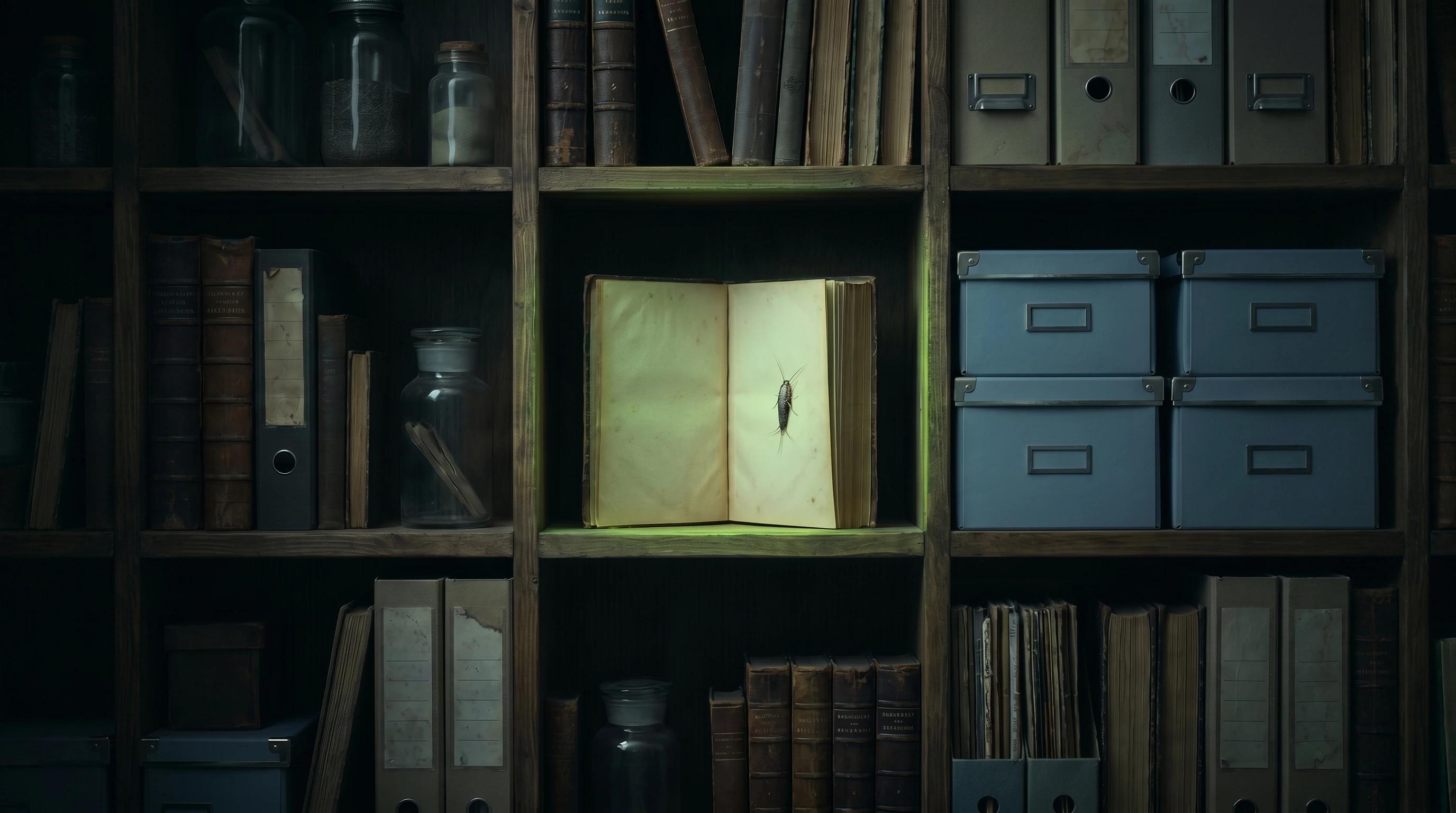
Silverfish (Lepisma saccharina and other species) are wingless insects, 10–15 mm long, silvery-grey, teardrop-shaped, with three long tail filaments. Fast scuttle, often spotted at night when you turn on a bathroom light. Found Australia-wide, more common in coastal and high-humidity environments.
They’re harmless to humans (no bites, no disease) but they damage books, documents, photos, wallpaper, stored clothing, and dry food. Most homes have some silverfish; you only notice them when populations grow large or damage becomes visible.
What they actually eat
Silverfish digest cellulose and starch. Their target foods:
- Paper (books, documents, cardboard, photographs)
- Starches in book bindings and wallpaper paste
- Natural fibres (cotton, linen, silk) in stored clothing
- Dry pasta, flour, cereal, oats: anything starchy and accessible
- Dead insects (they’re opportunistic omnivores)
- Dried glues in cardboard boxes, photo album spines
Synthetic fibres (polyester, nylon) are safe. Plastic-bound books are mostly safe (silverfish go for the paper inside, not the cover). The hardest hits are old books with cloth bindings, stored cotton clothing, family photographs, and archived documents.
Signs of silverfish
- Live silverfish under torchlight in bathrooms, laundries, garages, sheds at night
- Tiny black pepper-like droppings in storage boxes, behind books, under sinks
- Irregular “notch” damage on paper edges or fabric, not clean rectangular holes (which suggests moths or beetles instead)
- Yellowish stains on paper or wallpaper
- Shed silver-grey skins in storage areas (silverfish moult repeatedly throughout life)
- Sticky tape, glued surfaces showing nibble marks
Why spraying doesn’t work well
Silverfish hide in cracks too narrow for surface spray to reach: behind skirting boards, inside book bindings, behind picture frames, in roof void cavities. Surface spray on visible surfaces kills the few you see; the population in cavities keeps breeding. A different approach works better.
What actually works
Reduce humidity
Silverfish thrive in damp air. Australian homes near the coast are often damp naturally; bathrooms and laundries are wetter still. Practical humidity reduction:
- Run bathroom exhaust fans during and after showers
- Fix any plumbing leaks (slow leaks under sinks, leaky tap washers, condensation on cold pipes)
- Ventilate roof voids if humidity is trapped (whirlybirds, ridge vents)
- Dehumidifier in problem rooms: silverfish need damp air, so drier rooms support far fewer of them over time
- Don’t dry laundry indoors in winter without ventilation
Targeted insecticidal dust
For active populations, a pro applies a fine insecticidal dust (silica gel, deltamethrin dust, boric acid) into wall cavities, roof voids, behind skirting boards and inside cabinets, not on books or clothes. Silverfish crawl through the dust, which sticks to their bodies and is ingested when they groom themselves. Lasts for months per application; the product label gives the period.
Storage practices
- Sealed plastic tubs for stored clothing, books, documents, photographs. Excludes silverfish from accessing the contents.
- Sticky monitor traps in storage areas to detect populations early.
- Don’t store cardboard boxes long-term in damp areas. Shift to plastic.
- Inspect old book collections annually. Move any infested volumes away from the rest.
DIY bait stations
Boric acid silverfish bait stations can be reasonably effective in conjunction with humidity control. Place in cupboards, under sinks, in roof void access points.
When to call a pro
- Visible damage to valuable books, documents, or stored items
- Populations large enough to see multiple silverfish per night per room
- DIY humidity control + storage practices haven’t cleared it after 3 months
- Damage to wallpaper or expensive textiles
Cost
Targeted silverfish treatment is usually bundled into a general pest treatment: $180–$400 covers it along with spiders, cockroaches, ants. Standalone treatment is uncommon. Ask whether silverfish are included.
Heritage-document or library-level treatment (museums, archives, libraries) is specialised and is quoted on the job.
The natural-deterrent myth
Cedar blocks, lavender sachets, bay leaves, cinnamon sticks, citrus peels are all commonly suggested. None work at any meaningful scale. They smell nice and may temporarily deter silverfish from the immediate area, but they don’t reduce the population. Don’t rely on them as the primary treatment.