Wasp nest in your eaves or roof? What to do
How to tell European wasps from paper wasps, why DIY removal of a European wasp nest is genuinely dangerous, and how pros remove a nest safely.
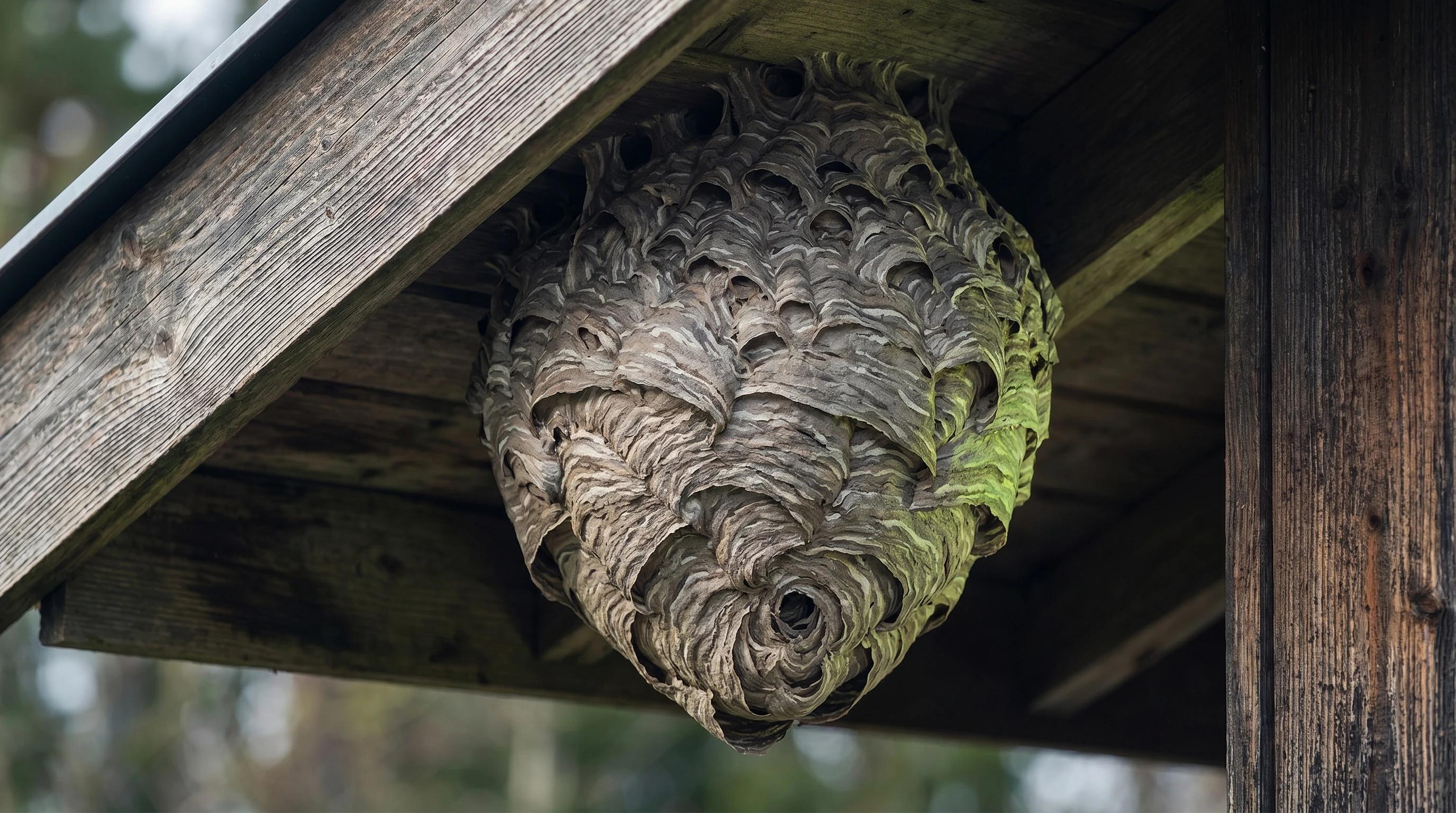
First: what kind of wasp do you have?
European wasp (Vespula germanica)
The dangerous one. Bright yellow with black stripes, ~12–17 mm, similar in colour pattern to a bee but with a smoother body (no fuzz) and a thinner waist. Builds papery nests in concealed spots: in-ground holes, wall cavities, ceiling cavities, roof spaces, sometimes inside compost bins. You usually see the wasps flying in and out of a small entry hole, not the nest itself.
European wasps are introduced and have no significant predators here. A single nest can hold thousands of workers by late summer. Stings are aggressive: workers release alarm pheromones that recruit more workers.
In WA, European wasps are a declared pest. Report a nest to the Department of Primary Industries and Regional Development (DPIRD) instead of treating it.
Paper wasp (Polistes species, native)
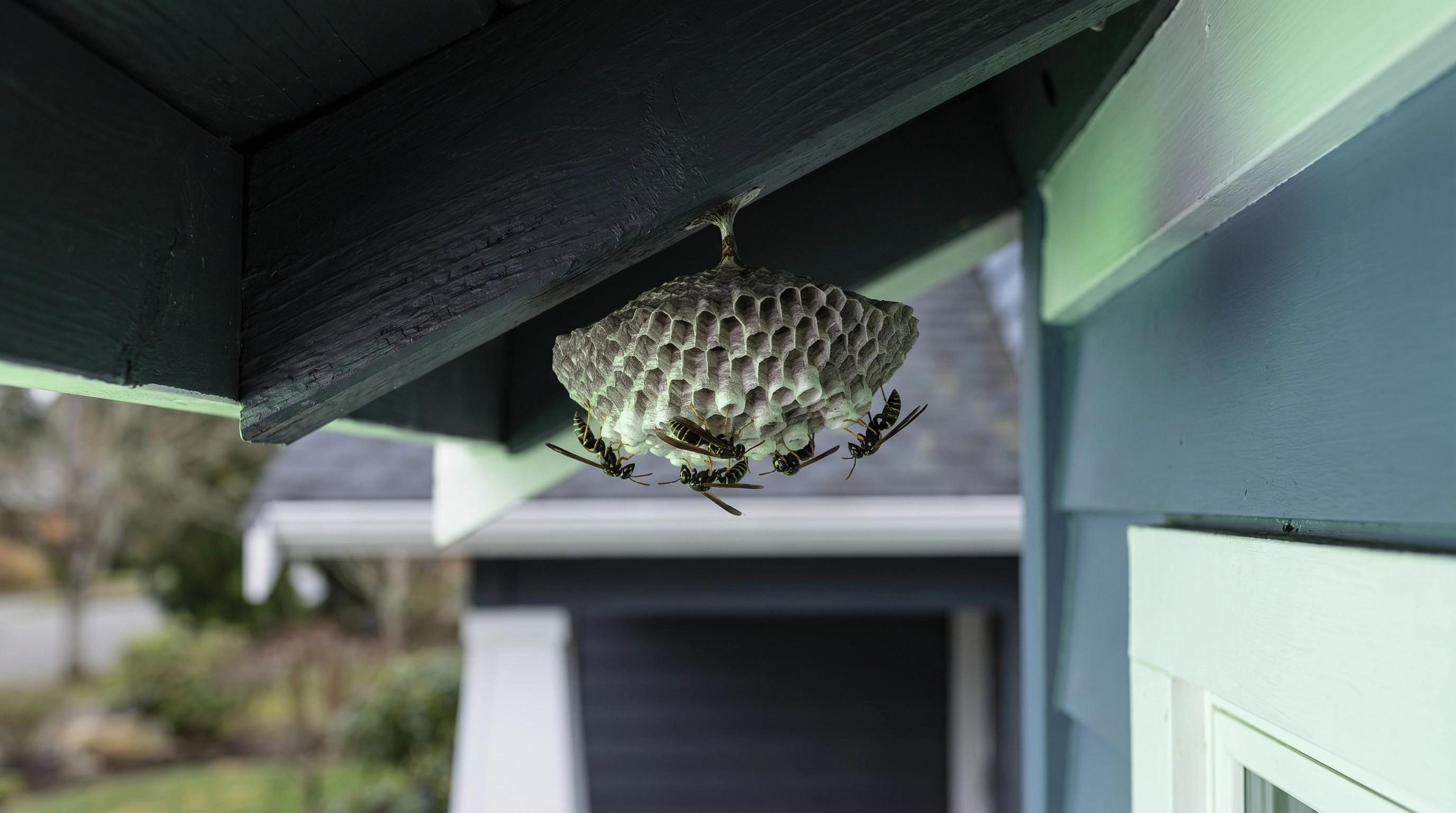
Brown or reddish-brown with yellow markings, ~15–25 mm, slender body. Builds small open umbrella-shaped nests with visible hexagonal cells under eaves, on fence rails, in shrubs. Usually only 10–30 workers per nest. Will sting if you approach within ~1 metre but isn’t aggressive at distance.
A small paper wasp nest in a low-traffic spot can usually be left alone. They prey on caterpillars and pests. A nest above your front door or kids’ play area needs removing.
Mud daubers and potter wasps
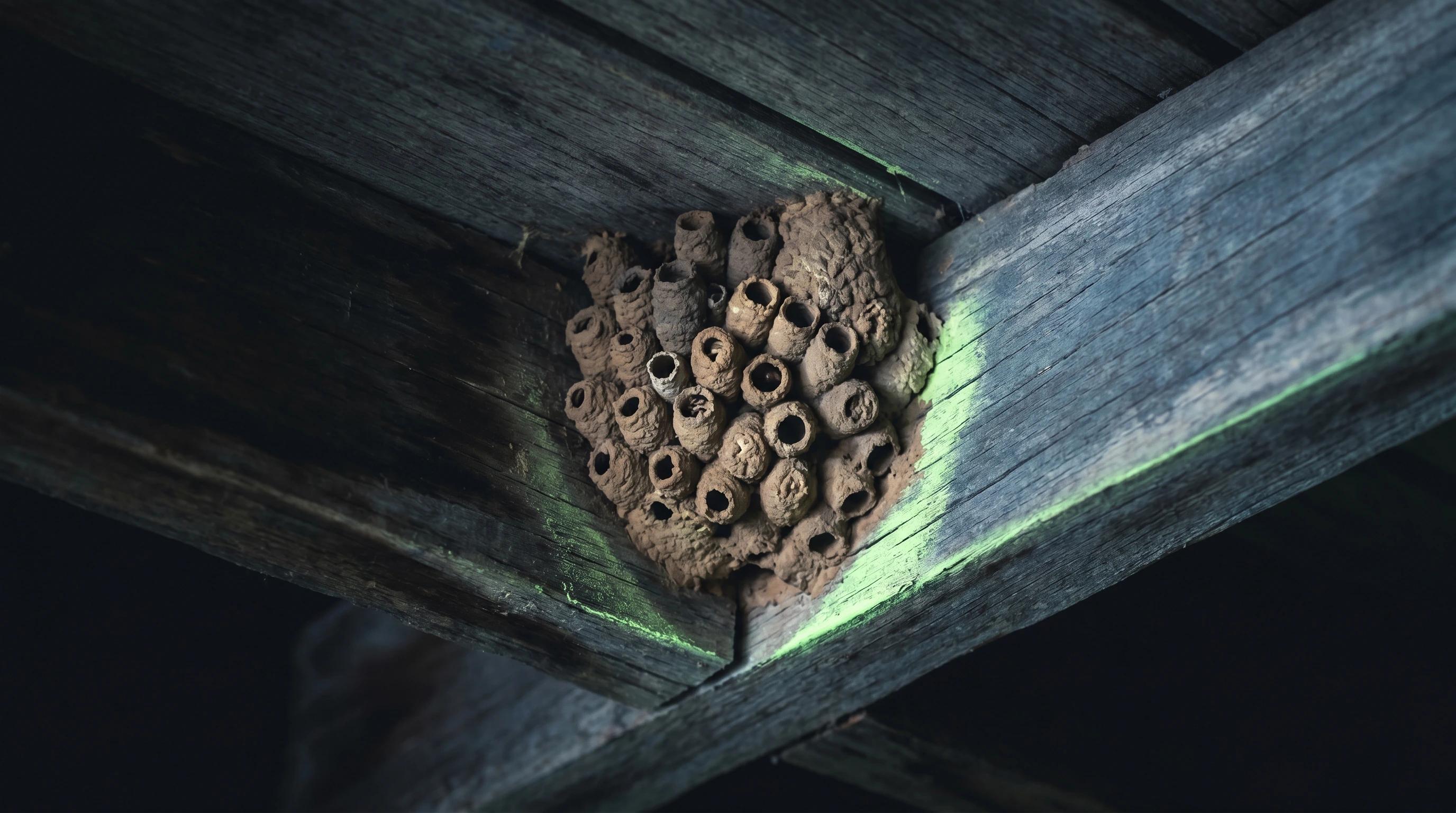
Solitary wasps that build small mud nests on walls, in sheds, in roof voids. Almost never aggressive: they hunt spiders and caterpillars individually, no colony to defend. Removable with a scraper once the wasp has vacated; treatment usually unnecessary.
Telling European wasps from honeybees
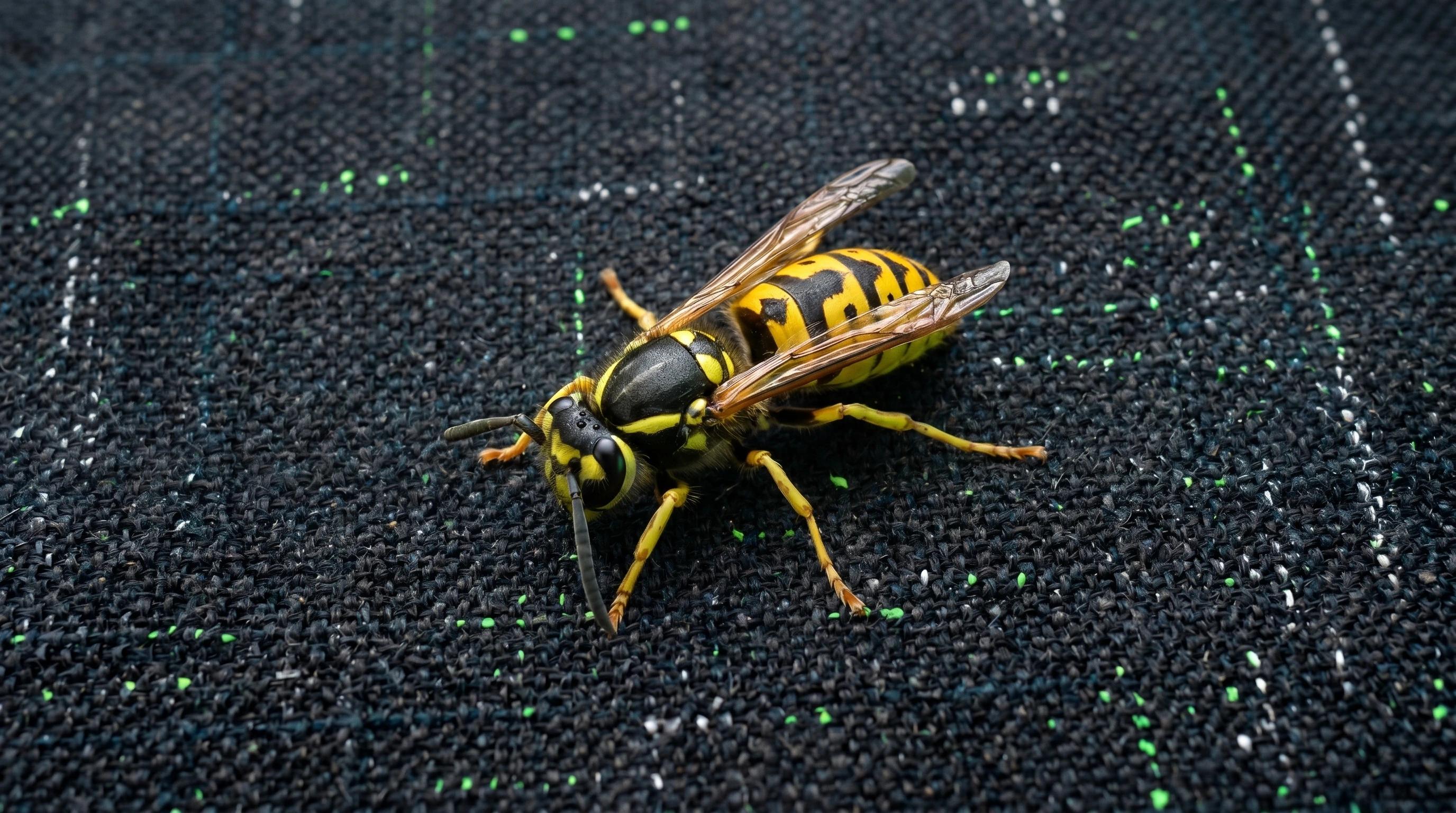
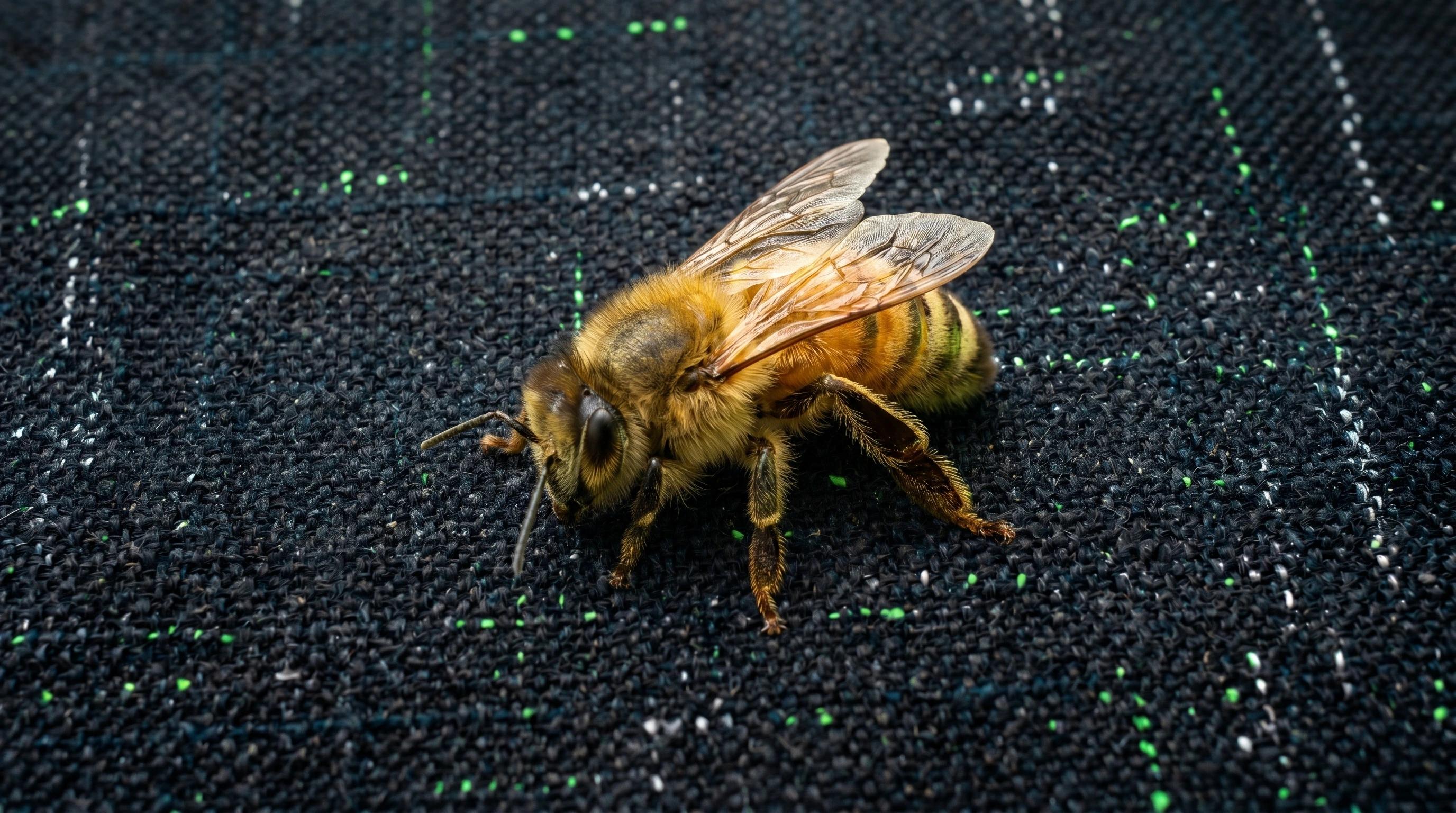
They look similar at a glance: yellow and black, similar size. Key differences:
- Honeybee: fuzzy / hairy body, broader, dulled yellow-brown. Pollen on hind legs. Lands and works on flowers.
- European wasp: smooth / shiny body, sharper yellow-and-black bands, thinner waist. No pollen baskets. Attracted to meat, pet food, sugary drinks.
If it’s drinking from your cordial bottle or hovering around the BBQ, it’s almost certainly a European wasp. Honeybees ignore those.
How a pro removes a European wasp nest
The standard procedure:
- Inspection at dusk or dawn: wasps are slower and more workers are inside. Pro identifies the species, locates the nest entry, plans access.
- Dust application directly into the entry hole: the pro uses a long-reach duster to puff a registered insecticidal dust into the nest entry. Workers walk through the dust on their way in and out and carry it deep into the nest. The queen and brood die over 24–72 hours.
- Re-check at 7–10 days: confirm no remaining activity. Re-treat if needed.
- Nest removal (sometimes): for nests in wall or ceiling cavities, the nest is often left in place after treatment because removal requires significant building work. For accessible nests, removal prevents secondary decomposition issues.
What NOT to do
- Don’t spray a flying wasp. The dying wasp’s pheromones attract more from the nest.
- Don’t block the entry hole with foam, putty, or tape before treatment. The wasps chew through and create new exits, often into your house. Always treat first, then seal.
- Don’t use a hose, fire, petrol, or boiling water. Doesn’t kill the queen. Causes property damage. Causes injuries.
- Don’t treat at the wrong time of day. Mid-day is the worst time: most workers are out foraging and they’ll arrive home to find the nest under attack.
- Don’t mow, prune, or do loud work near the nest. Vibration triggers swarming.
Cost
European wasp nest treatment runs $150–$300 per nest in suburban Australia (straightforward access). Hard access (high eaves, in-wall cavities requiring inspection) can be $300–$500. Paper wasp nest removal is typically $80–$180.
Treatment is usually warranted for re-treatment within 14–30 days if activity returns. Read the warranty terms.
When to call same-day
- Confirmed European wasp activity near a high-traffic area (doors, walkways, play areas, BBQ)
- Wasp activity in a wall cavity audible from inside the house
- Anyone in the household has a known wasp/bee sting allergy
- Active nest in school grounds, childcare, hospitality venue, or food business
Sting first aid
For a single sting in a non-allergic person: wash with soap and water, cold pack, antihistamine if itchy. For multiple stings, swelling beyond the immediate area, difficulty breathing, or any sting to the face/throat: call 000. Carry an EpiPen if you have a known allergy. If someone has a severe allergic reaction, use their adrenaline injector if they have one and call 000.