Wood borers in furniture and structural timber
Common Australian timber borers (lyctus, anobiid, longhorn), how to tell active from old damage, and when treatment is and isn’t worth it.
What wood borers are
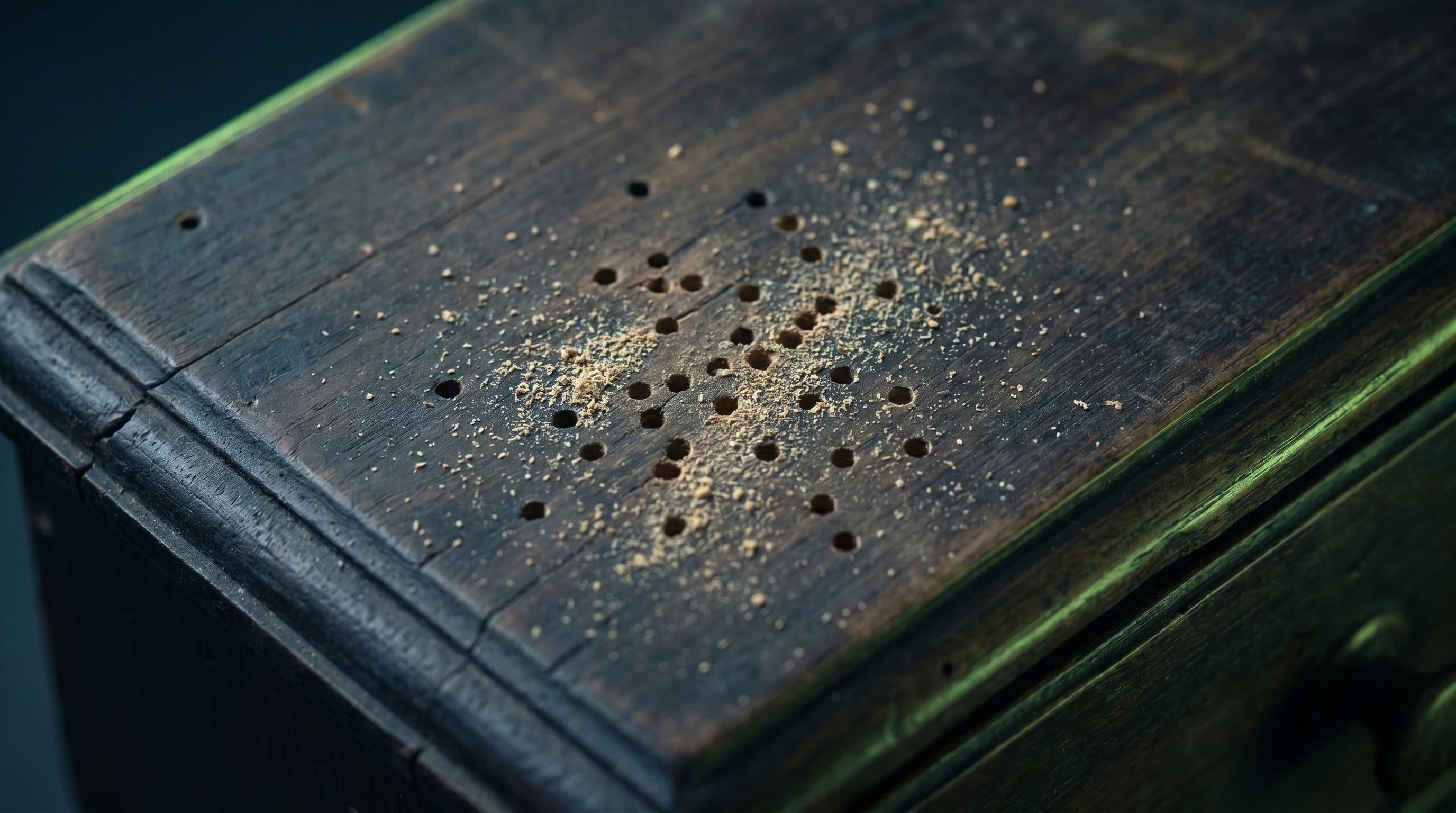
Wood-boring beetles lay eggs in or on timber; their larvae tunnel through the wood for 1–5 years before emerging as adults. The visible damage is the small round holes (“exit holes”) the adults leave when they emerge. Most damage is already done by then. The larvae did the boring.
Two borers commonly cause issues in Australian timber (lyctus and the furniture beetle), and a third, the European house borer, is a declared pest in WA:
Lyctus borer (powderpost beetle)
1–2 mm exit holes. Attacks the sapwood of hardwoods like Tasmanian oak, eucalypts, and some imported timbers. Fine flour-like dust (“frass”) falls from the holes. Most often a problem with newer hardwood furniture, flooring, or framing. Sapwood-only attack: once they finish that, they don’t cross into the heartwood. Life cycles vary.
Furniture beetle (anobiid borer)
2–3 mm exit holes. Attacks pine and softwoods in older furniture, antique timbers, structural framing in older houses. Coarser frass, slightly larger. Continuous reinfestation is common because adults lay eggs back into the same timber. Cycle 2–3 years.
European house borer (Hylotrupes bajulus)
3–10 mm oval exit holes that run with the grain. Attacks seasoned pine in structural framing. Declared pest in WA: if you suspect it, report it to the WA Department of Primary Industries and Regional Development before treatment, because pine movement is restricted where it occurs. Cycle 2–5 years.
Active vs old damage: how to tell
This is the key question that determines whether treatment is worth the money.
Active borer signs:
- Fresh frass (sawdust-like material) on the floor below or around the timber, often forming a small pile
- Exit holes look pale and clean inside, with sharp edges
- You see a borer emerge (uncommon: they emerge at night)
- Frass continues appearing after you wipe it away
Old / inactive borer signs:
- Holes are dark inside, dusty, with rounded edges
- No frass appearing
- No new holes have appeared over a 12-month observation window
When treatment is worth it
Treat:
- Active infestation in structural framing (load-bearing timbers)
- Active infestation in expensive antique furniture you want to keep
- Suspected European house borer (declared pest in WA: report it first)
- Wide-area damage in flooring or skirting that you don’t want to replace
Don’t bother (replace or accept):
- Old, inactive damage in non-structural items
- Small piece of furniture you can throw out or treat with DIY products
- Sapwood-only damage by lyctus in newer timber: generally cosmetic and the population dies out naturally as larvae complete development, except in structural timber, where it’s worth a pro’s look
- Cosmetic damage in solid-wood floors that already has decorative character
Treatment options
Surface application
For furniture and small items. Boron-based wood preservative or a liquid insecticide painted/sprayed on. Penetrates a few millimetres into the surface. Effective for preventing reinfestation, less effective for killing larvae deep in the timber. A pro can quote you for a single piece of furniture.
Fumigation
For valuable items or whole-room infestations. The item or room is sealed and fumigated. Fumigation is a job for a licensed fumigator. It penetrates through the timber to kill all life stages. Cost depends on scope and is quoted on the job. Mostly used for museum-quality antiques or library/archive settings.
Heat treatment
Whole room raised to 55–60°C for several hours. Effective on all life stages without chemicals. Used for valuable antiques where chemical residue is a concern. Ask a furniture conservator before heat-treating a valuable antique; heat can lift veneers and glue. Cost is quoted on the job.
Structural in-situ treatment
For framing in roof voids, subfloors (the space under a raised floor), walls. Combination of surface application, injection (drilling into the timber and injecting), and replacement of severely damaged members. Cost depends on the extent and is quoted on inspection.
What to do with infested antique furniture
The pragmatic approach:
- Isolate the piece: move it away from other timber furniture and wrap it in plastic if possible. Stops reinfestation spreading.
- Photograph and document the damage: useful for insurance or tax claims if the piece is valuable.
- Get a borer ID + activity assessment from a pro. Important because lyctus in sapwood is often self-limiting, while furniture beetle usually needs treatment.
- Choose treatment based on value: family heirloom = fumigation or heat (no surface damage; for heat, ask a furniture conservator first). Mid-value antique = surface treatment. Low-value or modern furniture = often cheaper to replace.
Prevention
- Sealed/finished timber surfaces are far less attractive to borer egg-laying. Painted, varnished, or polished timber resists infestation.
- Don’t store untreated timber (offcuts, firewood, untreated furniture) inside the house for long periods. These can introduce borers to existing furniture.
- Annual inspection of accessible roof framing during termite inspection.