Bee swarm or wasp nest? Who to call, and what’s safe to do
How to tell a bee swarm from a wasp nest, why a swarm is a job for a beekeeper, and when you need a pest controller instead.
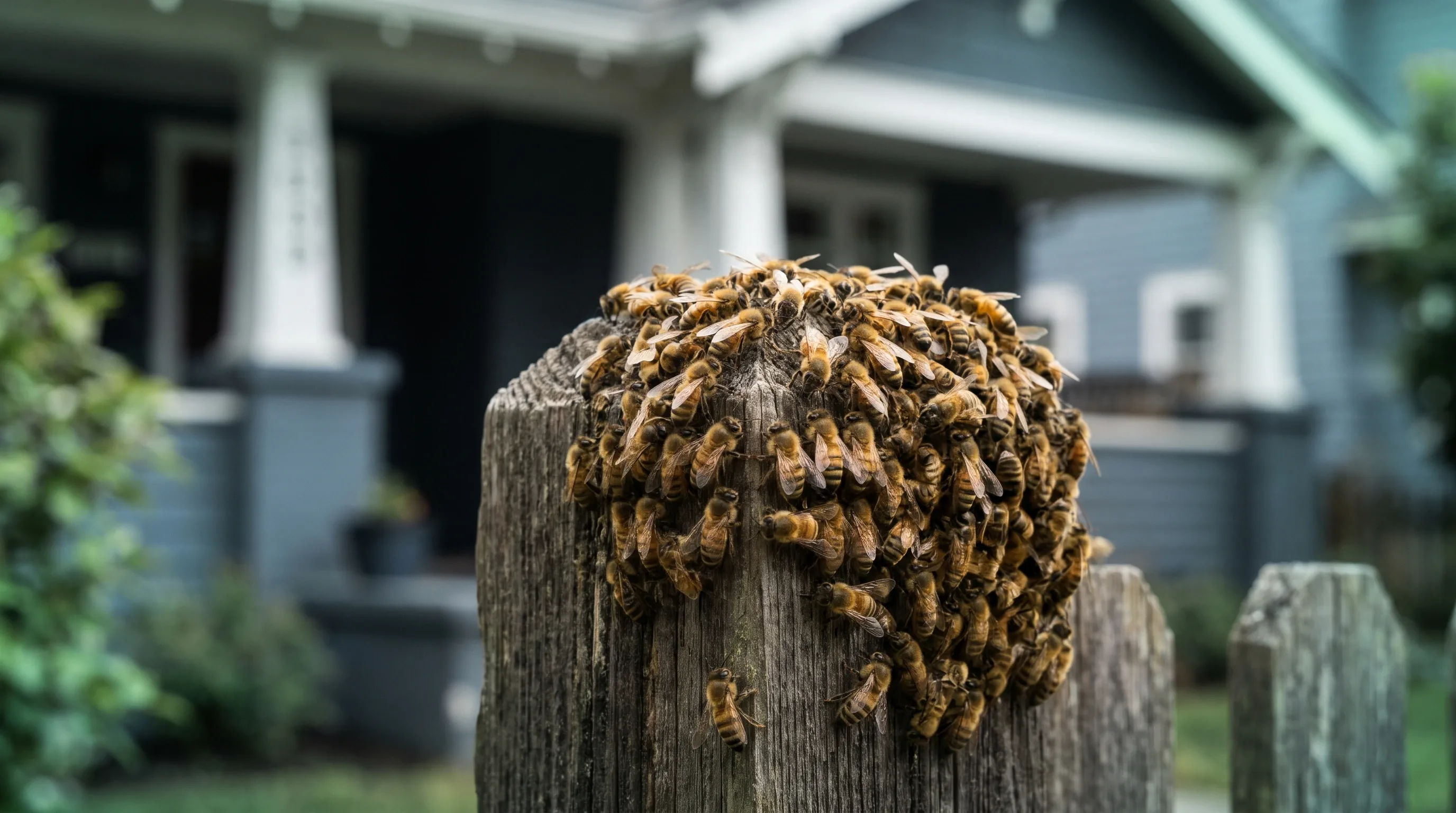
Spring and summer bring both. A cluster of bees on a branch and a nest of wasps under the eaves can look like the same problem, but they need different people. Getting it right keeps you from being stung, and keeps honey bees alive.
First, which is it?
- A honey bee swarm is a cluster of bees hanging from a branch, a fence or the side of a building. It’s a colony that outgrew its hive, resting while it looks for a new home. Swarms are most common from September to December.
- An established bee colony has bees flying steadily in and out of one gap: a hole in a wall, the roof, a tree or a meter box.
- A wasp nest is something the wasps built, from paper or mud, under the eaves, in a wall or roof space, or in the ground.
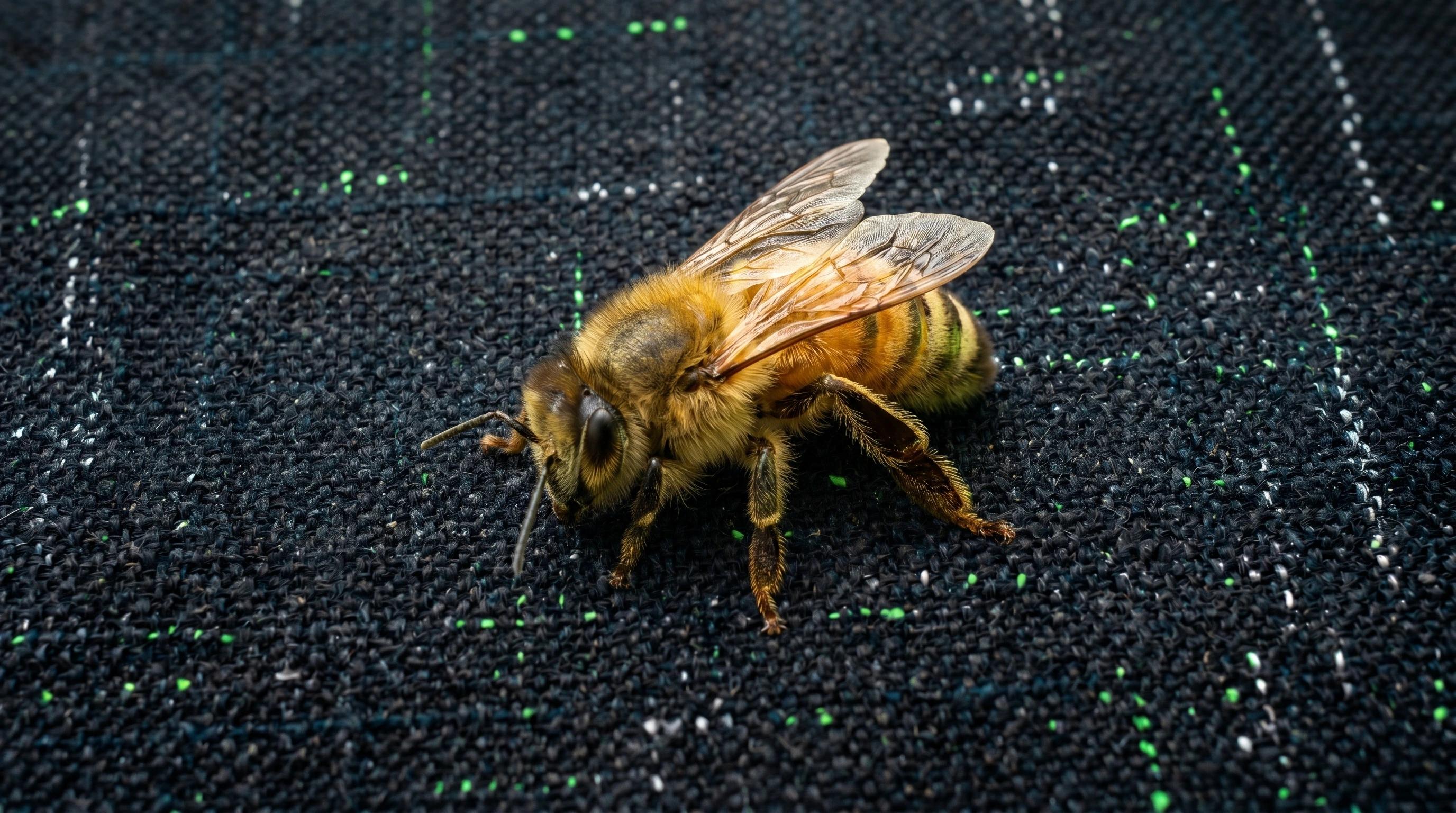
For a closer look at the difference, see our wasp nest guide.
A bee swarm: leave it, and call a beekeeper
- Swarming bees aren’t usually inclined to sting if they’re left alone.
- Keep children and pets away from it.
- Don’t spray it, hose it, or try to move it yourself.
- Call a beekeeper or swarm collector to take it away. NSW councils point people to the Amateur Beekeepers Association, which lists collectors by postcode. Elsewhere, try a local beekeeping club or ask your council.
A swarm may also move on by itself once it finds a new home.
Bees in a wall or roof: a different job
Once a swarm moves into a wall cavity, a roof or another space nobody can reach, a beekeeper often can’t collect it. Councils advise calling a licensed pest controller at that point. Some beekeepers and pest controllers can take out a whole colony instead, so ask what they’ll do with the comb, and how they’ll seal the gap so bees don’t move back in.
A wasp nest: call a pro
European wasp nests are the dangerous ones. The wasps defend the nest, can sting more than once, and attack in numbers when it’s disturbed. Don’t block the entrance or spray into it yourself.
Native paper wasps and mud wasps are usually less trouble, and a small nest out of the way can often be left alone. A pro can tell you whether it needs treating at all.
In WA, European wasps are a declared pest. Report a nest to the Department of Primary Industries and Regional Development (DPIRD) instead of treating it.
Who to call
- Honey bee swarm in the open: a beekeeper or swarm collector.
- Honey bees living in a wall or roof: a pest controller, or a beekeeper who removes colonies.
- European wasp nest: a pest controller. In WA, report it to DPIRD.
- Paper or mud wasp nest: a pest controller, if it needs treating at all.
Related
Read wasp nest in your eaves or roof for how pros treat a nest safely, and pest control by season for what else to expect over summer.