How to get rid of cockroaches in your house
German vs Australian vs American cockroaches, why German cockroaches are the hard one, and the gel-bait + IGR treatment that works.
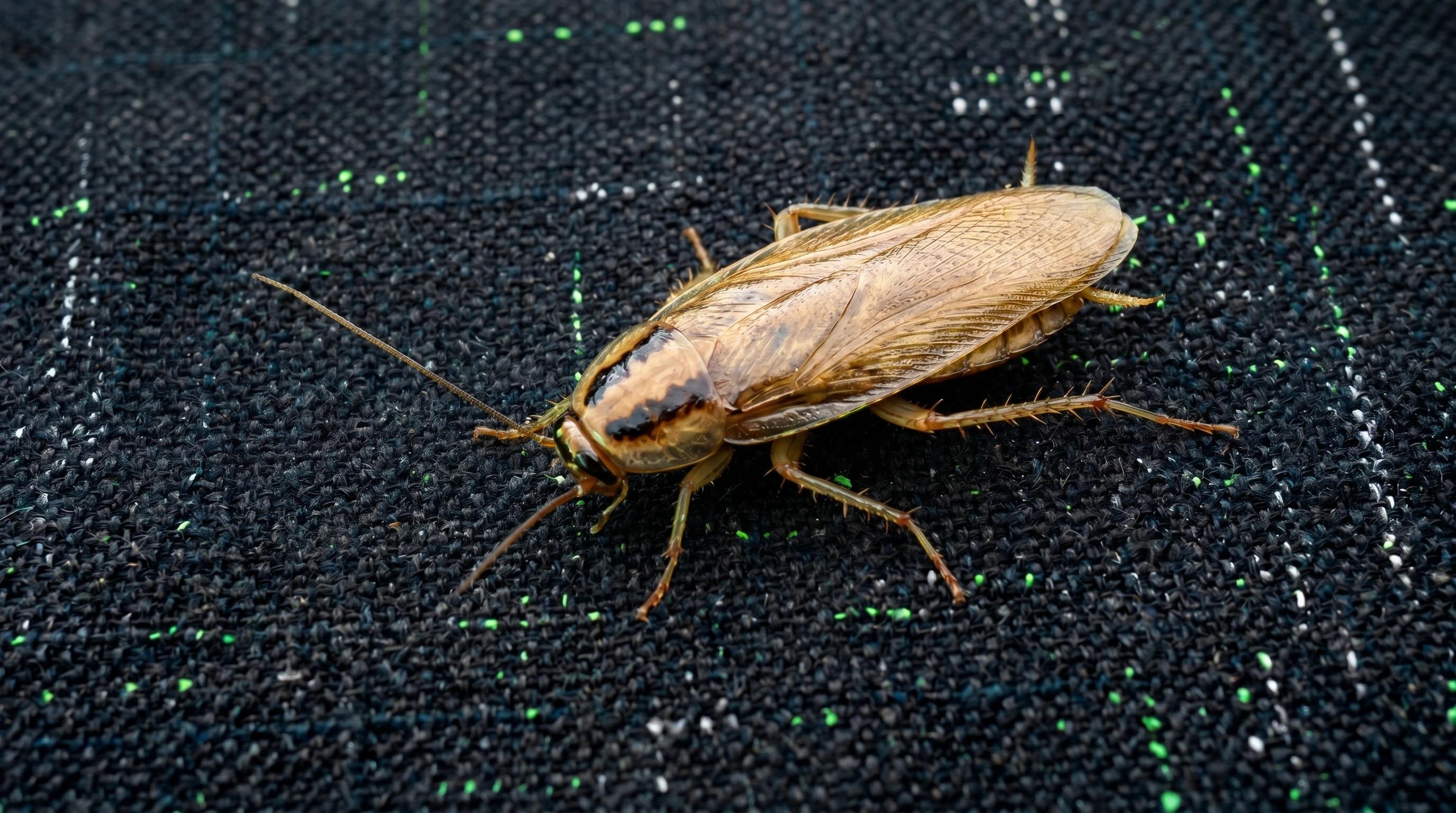
First: which cockroach do you have?
In Australia there are three species you commonly see in homes, and they need very different responses. Getting the ID wrong is the single biggest reason DIY treatment fails: what works for one species won’t work for another.
German cockroach (the real problem)
12–15 mm, light brown to tan, two dark parallel stripes behind the head, fast. Stays indoors permanently: they breed in your kitchen, your bathroom, behind the fridge motor, inside the back of the microwave. If you see one during the day, the population is already large. A single egg case carries 30–40 nymphs and a female produces 4–8 cases in her lifetime.
German cockroaches are genuinely a health problem: they spread food-poisoning bacteria, trigger asthma, and contaminate food prep surfaces. They’re also the species commercial kitchens have to treat aggressively for food-safety audits.
Australian / American cockroach (mostly not a problem)
30–40 mm, dark reddish-brown to almost black, can fly short distances, mostly outdoors. Lives in subfloors, garden mulch, drains, woodpiles. Comes inside through drains or gaps after rain, looking for food or moisture. The big cockroach you might see scuttling on a path at night is one of these.
They’re unpleasant but not breeding indoors in any meaningful way. A once-or-twice-a-year exterior perimeter spray + sealing entry points handles them without a full indoor treatment.
Brown-banded cockroach (less common)
10–14 mm, light brown with two pale yellowish bands across the wings. Lives in warm, dry spots: behind picture frames, inside electronics, in ceiling cavities (not under sinks like German cockroaches). Less common in Australian homes but present. Treatment is similar to German cockroach.
Signs you have German cockroaches
- Seeing them during the day. Cockroaches are nocturnal. If they’re out in daylight, harbourage is overcrowded. The population is already larger than you think.
- Dark specks like coarse pepper along edges, behind appliances, inside cupboards. Faecal pellets: the more there is, the bigger the population.
- Egg cases (oothecae): small brown capsule-shaped cases, often stuck to undersides of shelves, behind picture frames, or inside the motor area of appliances.
- A musty, sweet, oily smell in a heavily infested kitchen. Most people don’t notice this until a pro points it out.
- Cast skins: translucent papery shells from each moult.
Why surface sprays don’t work on German cockroaches
The supermarket residual sprays kill the adults you see, but they don’t reach the harbourage (the cracks behind the fridge, inside the motor, inside the kettle base, inside cupboard hinges, behind power outlets). The population there keeps breeding. Worse, most consumer pyrethroid sprays are repellent: cockroaches avoid the sprayed surfaces and move deeper into the wall cavity, where the next generation hatches out of reach.
You can spray for months and the population won’t fall.
What actually works
The professional standard is cockroach gel bait + an insect growth regulator (IGR), no spray. Why:
- Gel bait is non-repellent. Cockroaches walk over it, eat it, and carry it back to harbourage where they defecate and die. Other cockroaches eat the dead ones and the faeces. The colony cascade-collapses over 2–3 weeks.
- IGR breaks the breeding cycle. Insect growth regulators prevent nymphs from reaching reproductive maturity. The colony can’t replace itself. Critical for long-term control.
- No spray means harbourage isn’t disturbed. Cockroaches stay in their hiding spots and continue eating bait. Spray drives them deeper.
A pro will place 20–40 small gel-bait dots at the right spots (hinge points, appliance motors, cupboard joins, behind toe-kicks) plus apply an IGR. Re-check at 2–3 weeks. Most properties are clear after 4–6 weeks.
What to do before the pro arrives
- Clean the kitchen thoroughly. Crumbs, grease, and pet food compete with the bait. The cleaner the kitchen, the more attractive the bait.
- Empty cupboards if you can. The pro needs access to hinges, corners, and the back wall.
- Don’t spray anything yourself. Repellent spray contaminates gel-bait placements and reduces effectiveness for weeks.
- Put food in sealed containers. Reduces competing food sources.
- Fix water leaks. Dripping taps, condensation on cold pipes, poorly-sealed dishwasher drainage all give cockroaches the water they need.
Cost
A pro German cockroach treatment for a typical Australian house or unit runs $180–$400 for an initial visit. A follow-up at 2–3 weeks is often included, or about $100–$150 if it’s charged separately. Commercial kitchens are billed quarterly on contract. See our commercial pest control guide.
What about Australian and American cockroaches?
For the big outdoor species, the right approach is:
- Seal entry points: door sweeps, weep-hole screens, gaps around pipes and conduit, broken eaves vents.
- Annual exterior perimeter spray on eaves, fence lines, garden beds against the house. Stops the seasonal surge after rain.
- Manage moisture: fix leaking gutters, redirect AC condensate away from the slab, don’t pile mulch against the house.
- Treat drains if cockroaches come up through them. A bio-enzyme drain treatment kills the eggs and biofilm they breed on.
A general annual pest control treatment covers this. See our how-often guide.
When to call a pro vs DIY
Call a pro if:
- You’ve confirmed German cockroaches (small light-brown, daytime sightings, behind appliances)
- You’ve tried gel bait yourself and it’s not working
- You’re a food business (inspectors expect to see pest control records)
- You have an asthmatic in the house: cockroach allergens are a major asthma trigger
DIY is fine if:
- You’re seeing the big outdoor cockroaches only after rain (perimeter spray + entry-point sealing)
- You have an occasional sighting and no daytime activity or egg cases