Commercial pest control for restaurants and food businesses
What the food safety standard asks of you on pests, what a regular pest program covers, and the records worth keeping on file.
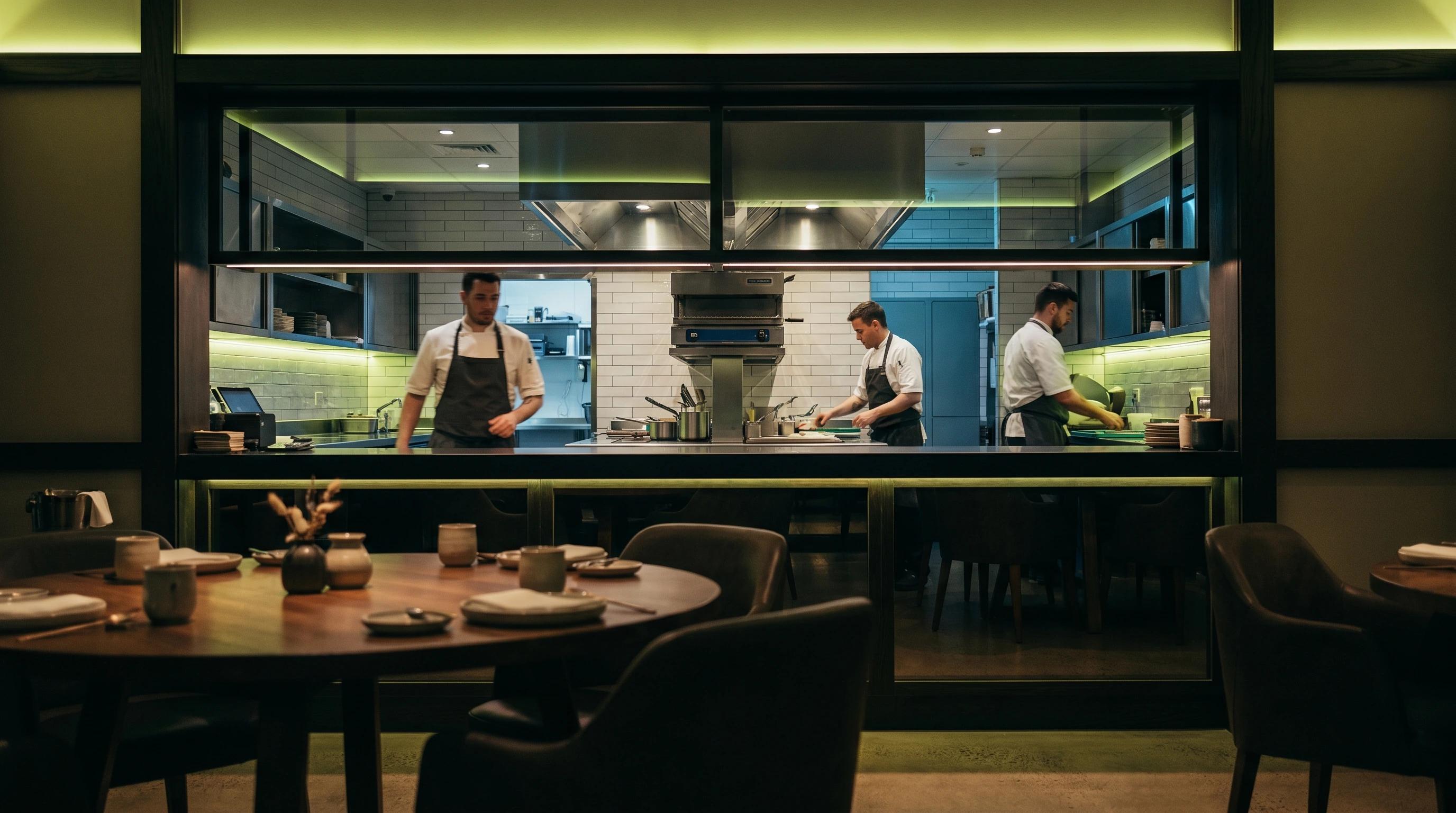
What food businesses need
Anywhere the public eats (restaurants, cafés, bakeries, food trucks, supermarkets, juice bars, gyms with kitchens, school canteens, hotel kitchens) operates under Food Standards Australia New Zealand (FSANZ) Standard 3.2.2, which requires businesses to prevent pests from entering, and eliminate any that do. Local council Environmental Health Officers (EHOs) check this through unannounced inspections.
The standard doesn’t say you must hire a pest controller or sign a contract. In practice, most food businesses show they meet it with a regular pest control service and written records: a report from each visit, a log of any pests staff see, and a map of the bait stations and monitors. Food Standards Australia New Zealand calls written reports of pest inspections and treatments useful documents to keep.
What a commercial pest program covers
Quarterly preventive service (standard)
Most Australian food businesses are on a quarterly contract: 4 visits per year. Each visit covers:
- Interior inspection: kitchen, prep areas, dry storage, cool rooms, dishwashing area, public toilets, bin areas, void spaces.
- Targeted treatment of priority pests: German cockroaches, rodents, flies. Usually gel bait + an insect growth regulator (IGR) + monitoring stations rather than spray-everywhere.
- Exterior perimeter treatment: building exterior, bin storage, loading dock, fence line.
- Bait station monitoring: tamper-resistant rodent stations at every entry point, refreshed and logged.
- Fly management: UV traps, residual surface treatment in cool/dark zones, bait stations for outdoor flies.
- Service report: signed and dated, kept in your pest log file for the EHO.
Monthly service (high-risk sites)
Production kitchens, food manufacturing, sites with persistent issues, sites near water bodies or rubbish facilities, sites with prior failed audits: these often go to monthly service.
Records worth keeping
Have these accessible at all times (a folder on the office shelf or a digital folder):
- Your pest control service agreement, if you have one
- Service reports from each visit (date, technician, products used, observations, actions)
- Site map showing bait station locations and pest monitoring devices
- Pest sightings log filled in by staff (date, what they saw, where, action taken)
- Safety Data Sheets (SDS) for any chemicals on-site
- Australian Pesticides and Veterinary Medicines Authority (APVMA) product registration numbers for treatments used
- Pest controller’s state licence number (NSW EPA, VIC Department of Health, QLD Health, etc.)
- Insurance certificate of currency for the pest controller (Public Liability + Professional Indemnity)
What pest control looks like under HACCP (a food safety plan)
If you’re HACCP-certified or working towards it (export production, large franchise operations, hospital catering), pest control is one of your Pre-Requisite Programs. A HACCP plan usually includes:
- A documented pest control program with defined frequency, scope, and responsible parties
- Trend analysis: month-over-month sightings data, escalation if numbers rise
- Corrective action procedures if those limits are breached
- Annual review of the entire pest control program
Most established commercial pest controllers in Australia handle the HACCP documentation as part of their service.
Cost
Commercial work is quoted per site. The size of the venue, the kind of food you handle and how often the pro visits all change the price, so ask each pro to quote on the same visit schedule. A regular service usually costs less over a year than calling someone out each time a German cockroach problem takes hold.
What to look for in a commercial pest controller
- Current state licence. Check the licence covers commercial work.
- Public liability insurance. Ask for the certificate of currency.
- HACCP-experienced technicians if you’re HACCP certified.
- Digital reporting: increasingly the norm. Service reports available online means you can pull them up for the EHO without paper-chasing.
- Same-day callout for sightings: built into the contract, not billed extra each time.
- Trend reports: sightings data over time. Critical for HACCP and for catching emerging problems before they become an EHO finding.
What you can do as the operator
Pest control is a partnership. The pro handles treatment; you handle prevention:
- Daily cleaning of kitchen surfaces, behind equipment, under prep benches
- Tight rubbish lid management: bins emptied before they overflow
- Loading-dock cleanliness: most rodent ingress is via deliveries
- Food in sealed containers, no exposed bulk food after hours
- No food brought into back-of-house unsealed (staff lunch in dining areas, not the prep kitchen)
- Staff trained to report sightings to the log every time
- Doors and fly screens kept closed; weather seals in good repair
A pest controller seeing “zero sightings, kitchen spotless” on their quarterly visit can’t do much more than maintain the bait stations. A site with cleanliness issues will see ongoing problems no matter how often you treat.
Related
See our cockroach treatment guide for the technical detail on German cockroach control (most common commercial kitchen issue), and the pest control cost guide for residential price benchmarks.