Mice or rats? How to tell which one is in your roof
Droppings, scratching sounds, gnaw marks, and entry point size all differ. Identifying the species changes the right treatment.
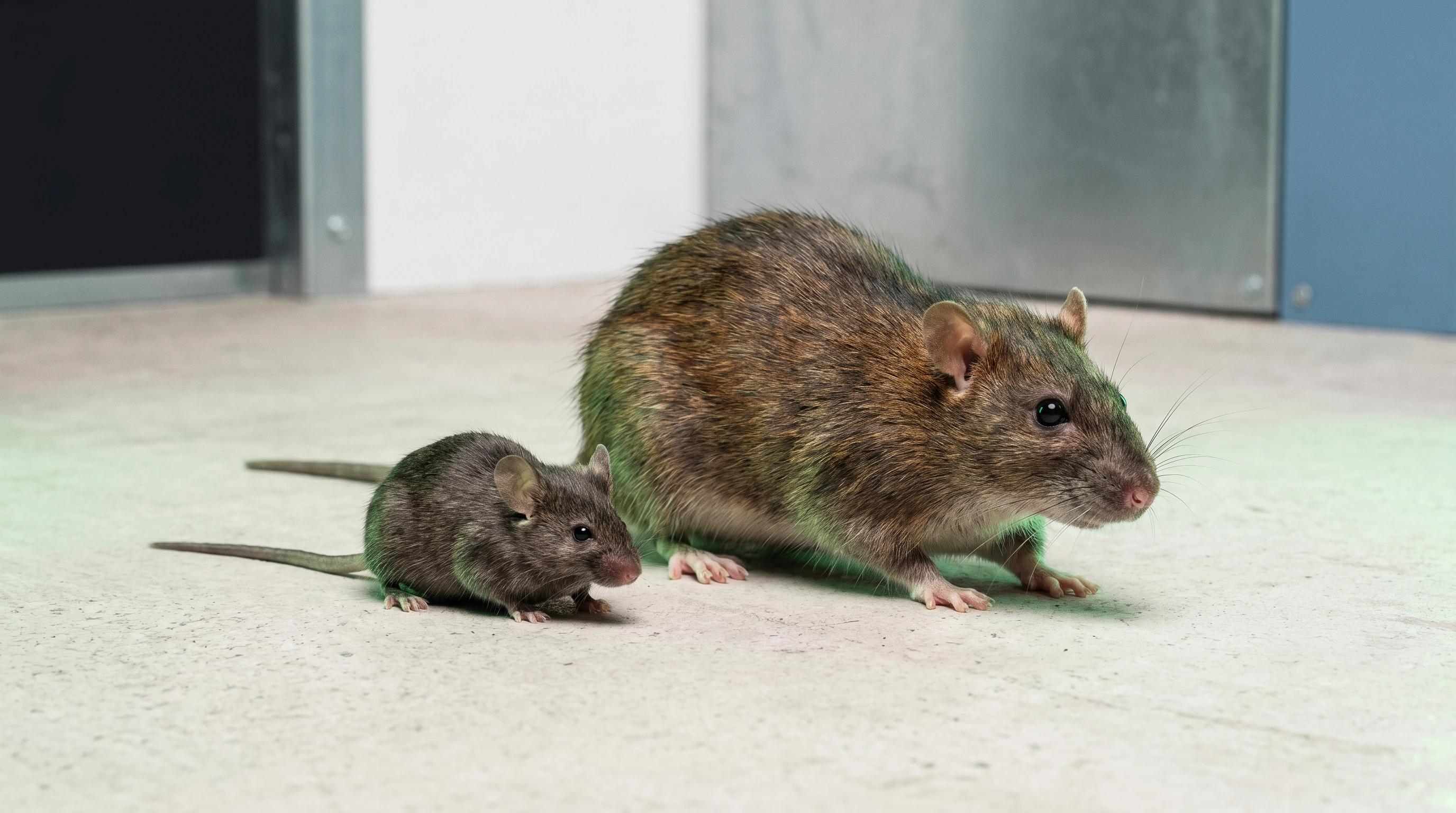
Quick ID via droppings
You almost never see the rodent itself. They’re nocturnal and avoid lit spaces. The fastest ID is by droppings, which look very different:
- House mouse: 3–6 mm, pointed at one end, like a small grain of rice. Black-brown. Many per location (dozens a day from each mouse).
- Roof rat: 12–13 mm, spindle-shaped (pointed both ends), thin. Dark.
- Norway rat: 15–20 mm, capsule-shaped (rounded ends), thicker than roof rat. Dark.
Rat droppings are several times longer than mouse droppings. If you’re unsure, photograph against a coin for scale.
By sound
- Mice: light scrabbling, squeaking. Fast pitter-patter. Hard to hear unless you’re in a quiet room directly below.
- Roof rats: distinct scampering and skittering on the ceiling/walls. Heavier than mice. Audible from across the room.
- Norway rats: heavier still, sometimes mistaken for possums. Slower, more deliberate movement. Often in the subfloor (the space under a raised floor) or wall cavities rather than the roof.
- Possums vs rats (common confusion): possums thump and stomp (think a soft heavy object falling). Rats scrabble and skitter (rapid, lighter taps). If it sounds like someone walking, it’s probably a possum.
By body and tracks
House mouse
7–9 cm body, 7–10 cm tail. Total length ~15 cm. Brown-grey, big ears for body size, pointed snout. Can fit through a gap as small as 8 mm. Breeds extremely fast: numbers can build up within weeks.
Roof rat (black rat, Rattus rattus)
16–22 cm body, tail longer than body (one of the key IDs), pointed snout, large ears that reach forward to cover the eye when flattened. Excellent climber. Common in roofs, wall cavities, trees near houses. Most common Australian roof rodent.
Norway rat (brown rat, Rattus norvegicus)
22–25 cm body, tail shorter than body, blunt snout, small ears that don’t reach the eye. Heavier-set than roof rat. Burrows under decks, sheds, subfloors, garden compost. Less common in suburban roofs but does happen.
Why the ID matters for treatment
Different species need different treatment approaches:
- House mice: small entry points (8 mm), often nested in kitchen voids, pantries, drawer cavities. Treatment includes interior snap traps + baits in tamper-resistant stations + sealing very small gaps. Don’t need outdoor bait stations as much.
- Roof rats: climbing species. Bait stations in the roof void + snap traps on travel paths in the roof + tree-branch trimming and exterior sealing. See our rats in roof guide.
- Norway rats: burrowing species. Outdoor bait stations at known burrow entrances, in-ground monitoring around decks/sheds. Less roof activity.
Common signs by species
Mice
- Droppings in cupboards, drawers, behind appliances
- Gnaw marks on packaging, paper, soap
- Small gnaw holes in plasterboard or skirting
- Nests in insulation, towels, packing material
Roof rats
- Loud overhead scampering at night
- Larger droppings in the roof void or along ceiling cavities
- Greasy “smear marks” on rafters along well-travelled paths
- Chewed electrical cable insulation (fire risk: escalate fast)
- Distinct urine smell on warm days
Norway rats
- Burrow holes (5–8 cm diameter) at base of decks, sheds, retaining walls
- Worn dirt “runs” between burrow and food source
- Damage to wooden deck timber and subfloor framing
- Sometimes seen at dusk in or near rubbish areas
What if I can’t tell?
Photograph droppings (with a coin for scale) and any visible damage, add the photos to your job. A pro who takes it can often tell from them. Treatment proceeds from there.