What does a termite inspection cost, and what does the pro actually do?
What an Australian Standard AS 3660.2 termite inspection involves, how long it takes, what the report covers, and typical pricing in 2026.
The short answer
A standard residential termite inspection in Australia costs $220–$500 and takes 1.5 to 2.5 hours on site. The written report usually comes back within a few business days. Which Australian Standard applies depends on the scope. A termite-only inspection of a home you own is covered by AS 3660.2(termite management in existing buildings). An inspection for every timber pest, not just termites, is covered by AS 4349.3 (timber pest inspections). That includes routine inspections and pre-purchase ones. The report should name the standard it was done with reference to.
The Australian Standard recommends an inspection at least every 12 months. Your inspector may suggest more often for a higher-risk property. Don’t skip them. By the time you can see termite damage from the outside, structural repair is usually already needed.
Who can do an inspection
A licensed timber pest inspector. Licensing is state-based:
- NSW: NSW EPA pest management technician licence. NSW issues a separate Timber Pest Management Technician licence class for termite work
- VIC: Department of Health pest control licence (Public Health and Wellbeing Act 2008)
- QLD: Queensland Health pest management technician licence
- WA: Department of Health pest management technician licence
- SA / TAS / NT / ACT: SA Health; NRE Tasmania; the NT Department of Health; the ACT EPA (via Access Canberra)
Many inspectors also hold AEPMA (Australian Environmental Pest Managers Association) membership, which signals additional training. A pro’s public profile on a marketplace should show both the licence and (if claimed) AEPMA status.
What gets inspected
A thorough termite inspection covers every accessible area where evidence of timber pests could appear. Expect the inspector to spend time on:
- Internal areas. Every room. Skirting boards, architraves, door frames, window frames, under sinks, behind toilets, inside cupboards.
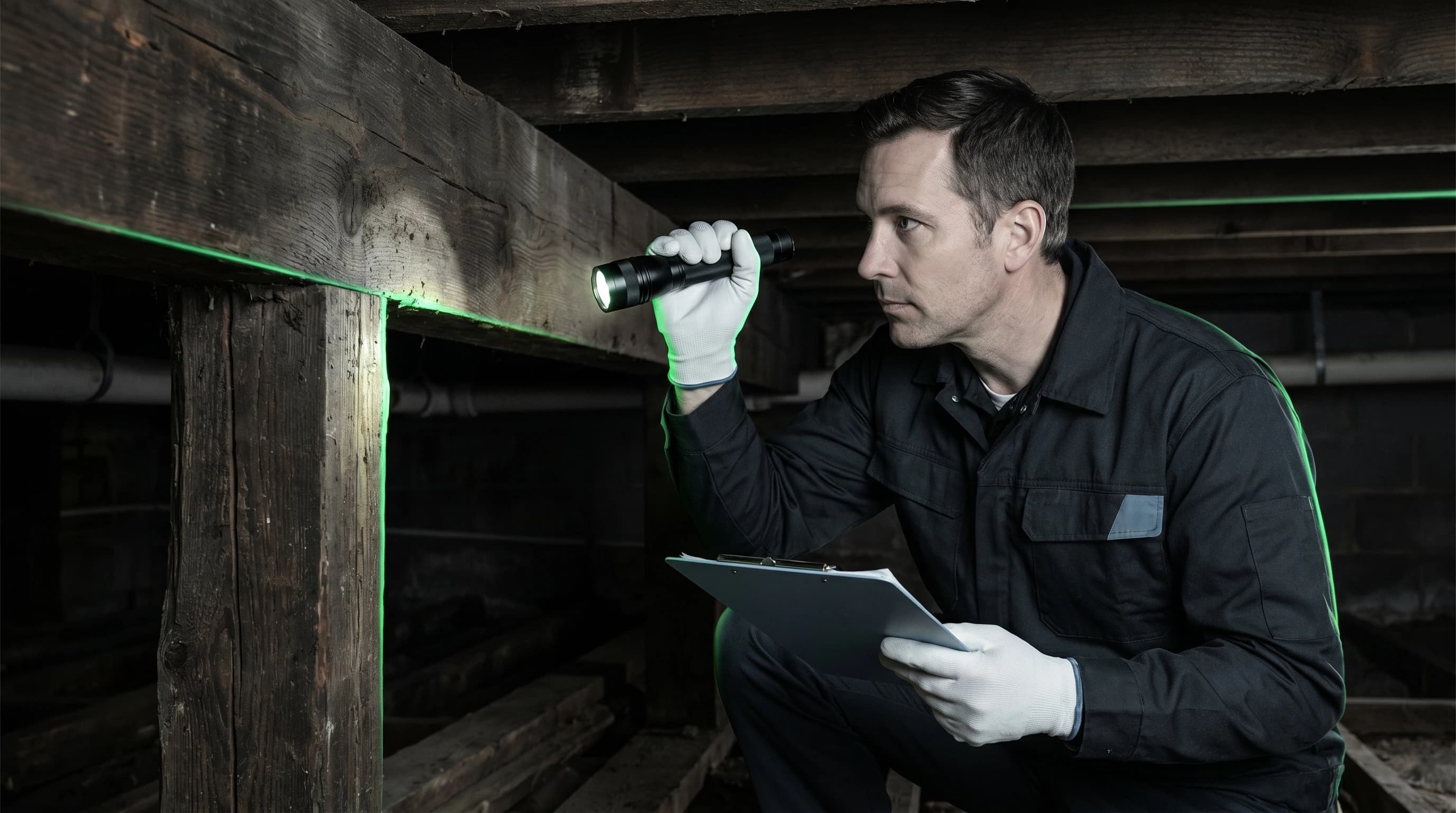
- Subfloor (where present). Crawl space inspection: bearers, joists, piers, ant capping, ventilation. A subfloor inspection is genuinely thorough work; if your inspector skips it on a property with a subfloor, the report is incomplete.
- Roof void. Inspector climbs into the roof space, checks rafters, ridge beam, eaves, ventilation, insulation.
- External walls + eaves. Especially around weep holes, brick-to-timber transitions, vents, and any timber-clad sections.
- Outbuildings. Garage, shed, pergola, deck: any timber structures on the property.
- Trees and stumps on the property. Conducive-condition risk factors; live colonies in nearby trees can move to the house.
- Fences and retaining walls (if timber). Less critical but commonly checked.
What tools are used
Beyond a torch and a screwdriver (for sounding suspect timber), most modern inspectors use at least two of the following:
- Moisture meter. Termites need moisture; elevated readings in walls or floors are a strong signal even before visible damage.
- Thermal imaging camera. Detects temperature differences inside walls caused by active termite traffic + moisture. Non-invasive.
- Termatrac (microwave radar). Detects termite movement inside timber and behind walls without drilling. A premium tool, and not every inspector carries one.
- Borescope. Small flexible camera for looking inside wall cavities through small drill holes when activity is suspected.
What the report contains
A good timber pest inspection report covers:
- Inspector + property details. Name, licence number, contact details and inspection date.
- Scope and limitations. What was inspected, what couldn’t be (locked rooms, inaccessible subfloor, dense storage in the way) and why.
- Findings. Active timber pest activity (termites, borers, fungal decay), past activity, and any visible damage.
- Conditions conducive to infestation. Moisture issues, soil-to-timber contact, garden beds against walls, faulty plumbing, blocked weep holes, etc.
- Recommendations. If active: treatment options. If conducive conditions exist: how to fix them. Prices come separately, in a quote.
- Photos. Photos of findings and areas of concern are common and useful, but a report doesn’t have to include them.
What an inspection is NOT
A timber pest inspection (AS 4349.3) is not a building inspection (AS 4349.1). Different standard, different scope. The building inspection covers structural defects unrelated to pests: cracking, plumbing, roofing, electrical concerns at a high level.
For pre-purchase due diligence you usually want both. Many pros offer a combined report at a small discount versus booking them separately. See our guide on pre-purchase pest + termite inspections for more detail.
What inspections can’t see
Australian Standard inspections are non-invasive. That’s more than looking: the inspector also taps or sounds timber and checks moisture. But cutting, drilling or moving things needs your OK or a separate agreement. So termites hidden behind plaster, under tile, or inside wall cavities can sometimes go undetected, even in a thorough inspection. A clean report says “no visible activity at the time of inspection”. It’s not a guarantee the building is termite-free forever, which is part of why annual inspections matter.
Booking + what to expect
- Book a few days ahead. Inspectors are typically booked 2–7 days out in metro areas. Pre-purchase inspections can be done with 24h notice for an extra fee.
- Be home or arrange access. Especially for subfloor and roof void: inspectors need to move things and use ladders.
- Plan for 2 hours on a 3-bed home. Less for an apartment, more for a house with subfloor + roof void + outbuildings.
- Report delivery. Same-day is rare. Most reports come back within a few business days. If you need it within a contract subject-to-inspection period, ask about turnaround at the time of booking.
Bottom line
$220–$500 once a year is one of the cheapest insurance policies you can buy on a timber-framed Australian home. The cost of a missed termite infestation is measured in repair bills that can run to thousands of dollars. Book a licensed inspector and look at the scope of their report. It should say which standard it was done with reference to.