7 signs of termites in your home (and what to do next)
Mud tubes, hollow timber, discarded wings, and four other telltale signs of an active termite colony, plus the critical "do not disturb" rule.
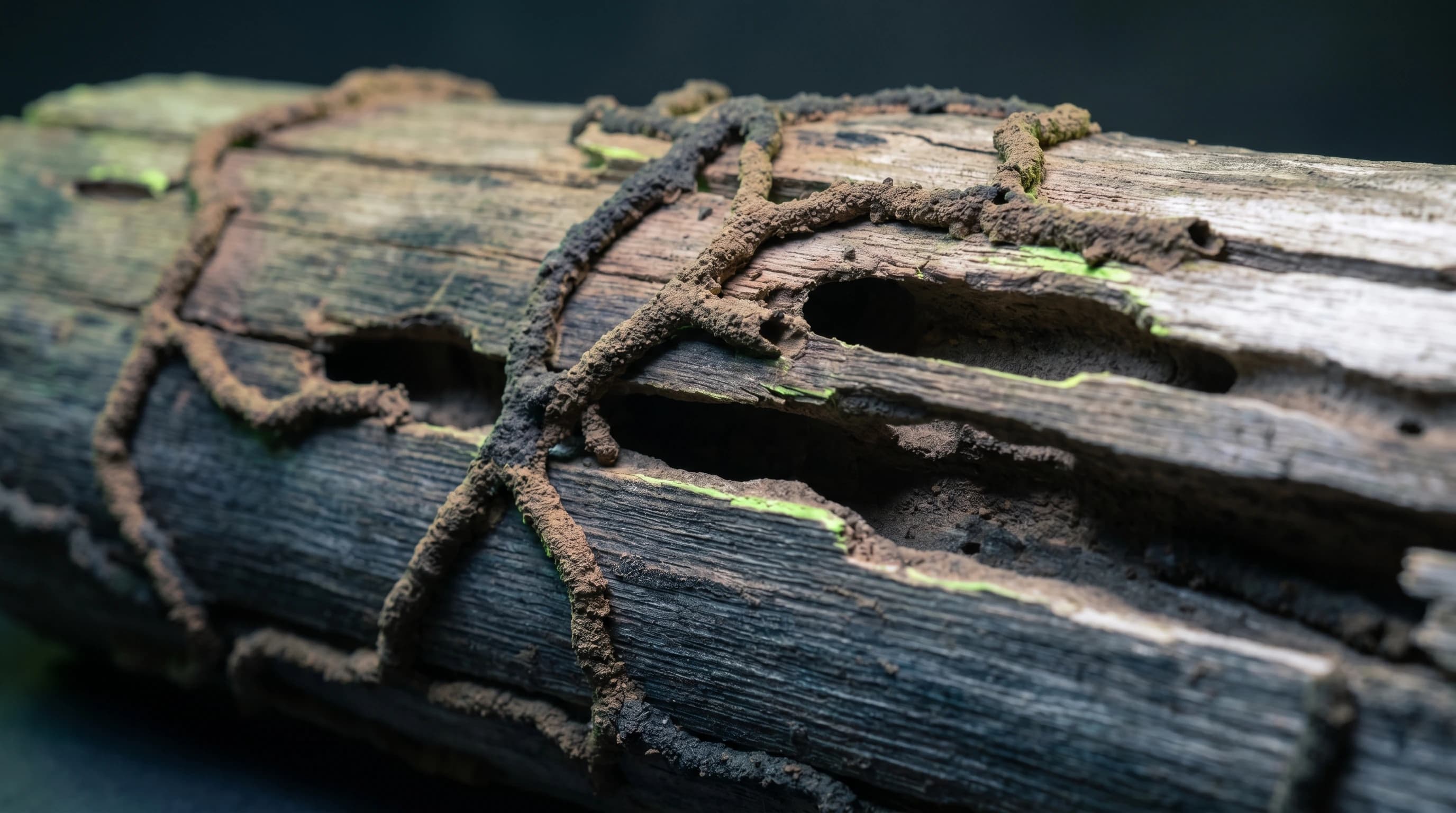
Critical: do not disturb
Before reading the seven signs: if you spot termites or active workings, your single most important job is to not disturb them. Don’t spray fly spray on them. Don’t pull the mud tubes off the wall. Don’t poke at the timber to see how bad it is.
Disturbed termites retreat. The colony seals off the disturbed area and continues destroying timber somewhere else in your building, somewhere you now have no idea about. A pest pro using bait, dust, or foam treatment relies on the workers travelling back to the colony with the active ingredient. Spook them, and that pathway closes.
Step away. Photograph from a distance. Call a licensed pest pro. That’s it.
1. Mud tubes
The single most common visible sign. Subterranean termites, the dominant pest species in Australia, build pencil-thin mud-and-saliva tunnels (also called shelter tubes or galleries) to travel between their underground colony and a wood food source. They need the humid microclimate inside the tube to survive above-ground daylight.
Look for them on:
- External walls, especially brick or rendered surfaces near the ground
- Foundation walls and piers in subfloor crawl spaces
- Weep holes, vents, and brick-to-timber transitions
- Inside the wall cavity if cracks let them in
- Sometimes hanging unsupported from ceilings or wall tops
2. Hollow-sounding or soft timber
Termites eat timber from the inside out, leaving a thin shell of paint or veneer on the outside. A skirting board that sounds hollow when tapped with a screwdriver, or a door frame that yields under thumb pressure where it should be hardwood: both are classic.
Don’t go around the whole house tapping every surface. That’s disturbance. Tap if you suspect a specific area, and stop after one or two confirming taps.
3. Discarded wings near windows or light fixtures
Once a year, mature termite colonies release winged reproductives (called alates or swarmers) on warm, humid evenings. In Australia, this is most common in late spring and early summer. The swarmers fly briefly, then shed their wings and try to start new colonies.
If you find small piles of identical translucent wings near your windowsills, light fixtures, or web-shaped wings caught in spider webs around the house, a colony nearby has just swarmed. The colony itself is close by. Could be your house. Could be the neighbour’s tree.
4. Sagging or buckling floors
Subfloor timber pier and bearer damage shows up as soft spots, sagging, or buckling in floors above. By the time you can feel it underfoot, the damage has been progressing for months. If you have a timber-framed subfloor and you’ve never had an inspection, this is the “book one today” signal.
5. Bubbling, cracking, or rippled paint
Looks like water damage, and is often misdiagnosed as such. Termites need moisture, so they bring it with them. Paint or plaster over termite-affected timber develops bubbles, cracks, or a rippled wallpaper-like surface as the underlying timber rots and distorts.
If the bubbling is in an unexpected place (interior wall, no plumbing nearby, no obvious leak), investigate. Press gently. If it’s soft, you’ve probably found active termite damage.
6. Frass (droppings)
Drywood termites (less common in Australia than subterraneans, but present in some coastal areas) push their droppings (called frass) out of small holes in the timber they’re eating. The frass looks like tiny pellets of sawdust or coffee grounds, often piled up below the entry hole.
Subterranean termites rarely leave frass you can see. Frass can mean drywood termites or wood borers, so call a pro either way. The treatment differs, but the urgency is the same.
7. Stuck windows and doors
Door and window frames bow as the timber inside them absorbs moisture and distorts. Windows that won’t open, doors that don’t close cleanly, or frames that visibly bulge can all be termite damage, especially if the problem appears relatively suddenly and isn’t obviously a humidity issue.
What to do if you see any of these
- Don’t disturb. Repeating because it matters: no spray, no poking, no removing mud tubes.
- Photograph from a distance. Take wide and close shots; share with the pest controller when you book.
- Call a licensed pest pro within 24 hours. Termite damage compounds fast. Day 1 of treatment is far cheaper than day 30.
- Check your warranty. If you’ve had termite treatment before, the warranty may still apply; its length depends on the system and installer. Check the certificate before booking a new pro. Going outside the original installer can void it.
- Don’t skip the inspection step. A reputable pro will inspect before quoting treatment. If someone offers a treatment quote sight-unseen, get another opinion.
What “treatment” looks like
After a positive inspection, expect a written quote covering one or more of:
- Nest treatment: direct chemical or foam application to the accessible nest.
- Termite baiting: bait stations placed where active workers are feeding; workers carry the active ingredient back to the colony.
- Chemical soil barrier: trenching or drilling around the perimeter to stop new colonies entering.
- Reticulation system: a buried hose around the building used to top up the barrier without digging trenches again.
The right combination depends on your building, your soil, and what the inspector finds. See our guide on termite inspections and what pest control costs in Australia for context.